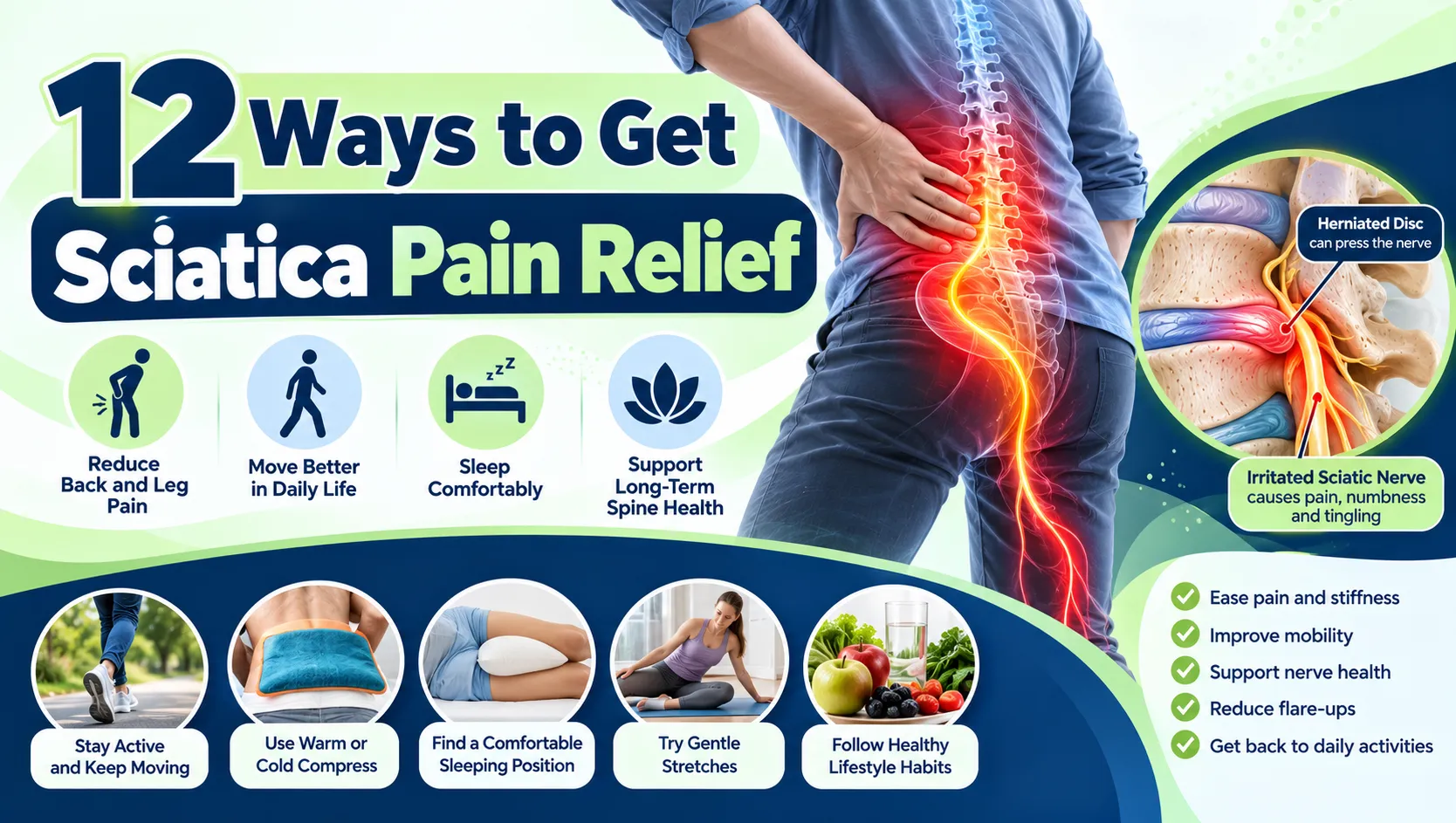
Sciatica pain can make everyday activities, such as walking, sitting, and bending, uncomfortable. It often causes sharp or burning pain that travels from the lower back to the buttocks and down one leg, sometimes accompanied by tingling, numbness, or weakness.
Sciatica occurs when the sciatic nerve becomes irritated or compressed. A slipped disc is one possible cause, although other spinal conditions can also contribute to the problem.
The good news is that many cases improve with appropriate care and time. Gentle movement, suitable exercises, and simple home-care measures may help ease discomfort. Here are 12 ways to get sciatica pain relief and support your recovery.
1. Keep Moving Instead of Staying in Bed
When the sensation travels into the legs, taking a break may be perceived as the best way to go. However, some rest is needed when one experiences pain, while bed rest is likely to result in stiffness in the body.
Try to move around the apartment for a while in small portions of time. Be sure to change positions and resume activities as soon as possible.
There is no point in pushing oneself through sharp pains. One should start with small activities and proceed gradually to greater ones.
2. Use a Warm Compress
A warm pack is useful for loosening up the muscles in the lower part of your back. Some individuals get relief with warm baths; others prefer to use a warm shower when their back is stiff due to prolonged sitting or lying down.
Apply the warm pack over the affected area for about 15 to 20 minutes. Put some cloth between your body and the warm pack. The warmth should not be excessive.
Never go to sleep with the heating pad turned on. When there is numbness in the area, pay special attention because you may fail to feel that your skin is getting burned.
3. Try an Ice Pack
The use of a cold pack can provide some relief from sciatica pain, particularly if there is pain in the sore area after performing any physical exercise. You should cover the cold pack with a thin towel and apply it to the affected part for 15-20 minutes. Do not apply ice directly to your skin. If cold doesn’t help you, then try a warm pack.
4. Take Short Walks Every Day
Going for a short walk may be a perfect exercise to get the body active, particularly if you sit all day. Walk gradually on flat terrain.
Try to begin with just two to three minutes if a long walk is difficult for you. Rest for a while and then add the walking time.
If you experience worsening leg pain or the pain begins to spread downwards in your leg, stop walking and consult your physician.
5. Avoid Sitting in One Position for Too Long
Long hours at a desk, on the sofa, or in a car can make sciatica pain harder to manage. This does not mean sitting is always harmful. The problem is often staying in one position for too long.
Try these small changes:
-
Get up and move around regularly.
-
Keep both feet supported when sitting.
-
Choose a chair that supports your lower back.
-
Avoid sitting on a very low sofa if getting up from it increases your pain.
If you work at a desk, set a regular reminder to stand and move. Frequent short breaks may be easier to manage than waiting until the back starts hurting.
6. Find a Sleeping Position That Feels Comfortable
Sciatic pain could lead to difficulties when trying to get into a good sleeping position. There isn’t any particular sleeping position that works for everyone, but one has to opt for the best option that will relieve him/her from discomfort.
If you are a side sleeper, use a pillow to cushion between your knees. If you like sleeping on your back, then the pillow could be placed under your knees.
It will not help you if you are forcing yourself to lie down in a position that will intensify your pain.
7. Try Gentle Stretches With Guidance
Certain exercises could help loosen up tension in the hips and lower back. Nonetheless, not all exercises will work for all conditions leading to sciatica pain. An exercise that works well for one individual may worsen the other’s condition.
A physiotherapist will be able to advise on the best exercises to undertake and the right way of going about them. Start slowly and ensure that you avoid bouncing, abrupt twists, and overstretching.
If the exercise causes sharp pain, increased numbness or tingling, stop it. Never go ahead with any exercise based on the fact that it is recommended for sciatica pain.
8. Pay Attention to How You Bend and Lift
Lifting the bucket, carrying the child, or handling the big bag becomes tough during pain episodes. A sudden twist when lifting can cause more stress on the back.
For the time being, refrain from carrying things that worsen your condition. If you have to lift anything, carry the thing near your body and move slowly without twisting.
If any kind of movement causes sharp pain in the leg, do not test yourself further. Allow yourself some rest for a while.
9. Use Pain Medicines Only After Checking They Are Suitable
Taking painkillers might help you to feel more comfortable moving around; however, these medications aren’t for everybody. Ibuprofen might harm individuals who have stomach, kidney, and heart issues. Also, they might interact with other drugs that you take.
Talk with your doctor or pharmacist regarding the use of painkillers in case you suffer from certain diseases or take medications.
It is never advised to take prescribed medications without consulting a doctor, take other people’s pills, or increase your dosage on your own. Painkillers will only mask the pain but won’t treat the underlying condition.
10. Consider Physiotherapy if the Pain Continues
If sciatica persists and hampers mobility, sitting, and work, physiotherapists can be consulted to develop an appropriate exercise program.
Such treatment will consist of gentle movement and strength-building exercises along with information regarding how to carry out daily tasks. The exercise program must be adjusted according to your particular symptoms and not vice versa.
Physiotherapy becomes all the more helpful if you have any doubts about what kinds of movements can be done without pain.
11. Avoid Smoking and Look After Your General Health
Smoking can have an impact on the health of your spinal discs and can delay healing as well. If you smoke, giving up smoking can help keep your back in good condition.
Being physically active and eating healthy will contribute to decreased strain on your back. It will take some time for these lifestyle changes to make a difference.
In case your back hurts a lot, don’t rush into rigorous exercise. Rather, do some light physical activities until the symptoms subside.
12. Get the Cause Checked if the Pain Does Not Improve
Sciatica typically occurs due to irritation or compression of a nerve in the lower back region. Slippery discs are a potential trigger for sciatica, although other problems with the back may lead to similar symptoms.
It is important to consult a specialist if sciatica is recurrent, progressive, or interfering with normal daily activities. An examination will help to identify the cause and determine whether additional tests are required.
An MRI scan is not always necessary in cases of sciatica. In case of very severe sciatica, persistent symptoms despite treatment, or evidence of nerve damage, your doctor will likely order an MRI scan.
It is important to contact a doctor immediately if sudden incontinence or bowel problems occur, numbness in the area of your groin or buttocks occurs, or severe weakness of your legs occurs. This might be a sign of very strong compression of your nerves in the lower back region.
When Should You See a Spine Specialist for Sciatica?
Mild sciatica often improves with time and suitable care. However, severe pain should not be ignored, especially when it affects the ability to walk or carry out everyday tasks.
Arrange a medical assessment if:
-
The pain is getting worse instead of settling.
-
Numbness or tingling keeps returning.
-
You notice weakness in the leg or foot.
-
The pain is affecting sleep, work, or normal movement.
-
Home care has not helped after a few weeks.
A spine specialist can check whether a disc problem or another condition is affecting the nerve. Treatment may involve medicines, physiotherapy, injections in selected cases, or surgery when there is a clear medical need. Most people do not need surgery for sciatica, but serious or worsening nerve problems need prompt attention.
Conclusion
Sciatica pain can affect everyday activities, including walking, sitting, and sleeping. Gentle movement, warm or cold compresses, comfortable sleeping positions, and guided exercises may help manage the discomfort. Avoid activities that worsen your symptoms, and seek medical attention if the pain persists or you notice numbness or muscle weakness. Identifying the underlying cause is important for choosing the right treatment. Dr. Dheeraj Batheja, Spine Surgeon in Gurgaon, with over 13 years of experience, can evaluate spine-related conditions and recommend suitable treatment options.
Frequently Asked Questions About Sciatica Pain Relief
1. How can I get immediate relief from sciatica pain?
For immediate relief from sciatica pain, try a comfortable position, gentle movement, or a warm or cold compress for 15–20 minutes. Avoid movements that worsen the pain. Relief varies depending on the underlying cause, and persistent or severe symptoms should be assessed by a doctor.
2. How can I get sciatic nerve relief at home?
You may find sciatic nerve relief through short walks, gentle stretches recommended by a physiotherapist, warm or cold compresses, and comfortable sleeping positions. Avoid prolonged bed rest and activities that increase pain. If symptoms persist or worsen, seek medical advice.
3. How to treat sciatica effectively?
How to treat sciatica depends on its cause and severity. Treatment may include appropriate pain medication, physiotherapy, gentle exercises, and changes to daily activities. In some cases, injections or surgery may be considered if symptoms persist or significant nerve compression is present.
4. How to get rid of sciatica naturally?
To help manage sciatica naturally, stay gently active, avoid sitting in one position for too long, use warm or cold compresses, and follow a suitable exercise routine. These methods may ease symptoms, but they may not resolve the underlying cause in every case.
5. Can you say goodbye to sciatic nerve pain in just 10 minutes with a natural method?
Some people may experience temporary relief within 10 minutes by changing positions, taking a gentle walk, or applying a warm or cold compress. However, no natural method can guarantee that sciatic nerve pain will disappear in 10 minutes. The results depend on the cause and severity of the condition.
6. What is the fastest way to relieve sciatic nerve pain?
The fastest way to relieve sciatic nerve pain varies from person to person. Changing to a comfortable position, taking short walks, and using a warm or cold compress may help. Avoid forceful stretching, and consult a doctor if the pain is severe or continues to worsen.
7. Does walking help relieve sciatica pain?
Yes, gentle walking may help some people manage sciatica by keeping the body active and reducing stiffness. Start with short walks on flat ground and gradually increase the duration as tolerated. Stop if walking significantly worsens your leg pain or causes new symptoms.
8. What sleeping position is best for sciatica pain?
The best sleeping position is one that reduces discomfort. Side sleepers can try placing a pillow between their knees, while those sleeping on their backs may find a pillow under their knees helpful. Avoid positions that increase pain radiating down the leg.
9. How long does sciatica take to go away?
Sciatica may improve within a few weeks, although recovery varies depending on the underlying cause and severity. Some people experience symptoms for longer and may need medical treatment or physiotherapy. Consult a doctor if the pain persists, worsens, or interferes with daily activities.
10. When should I see a spine specialist for sciatica?
Consult a spine specialist if sciatica pain persists, keeps returning, affects your daily activities, or is accompanied by numbness or weakness. Seek emergency medical care if you develop new bladder or bowel control problems, numbness around the groin or buttocks, or severe or rapidly worsening leg weakness.