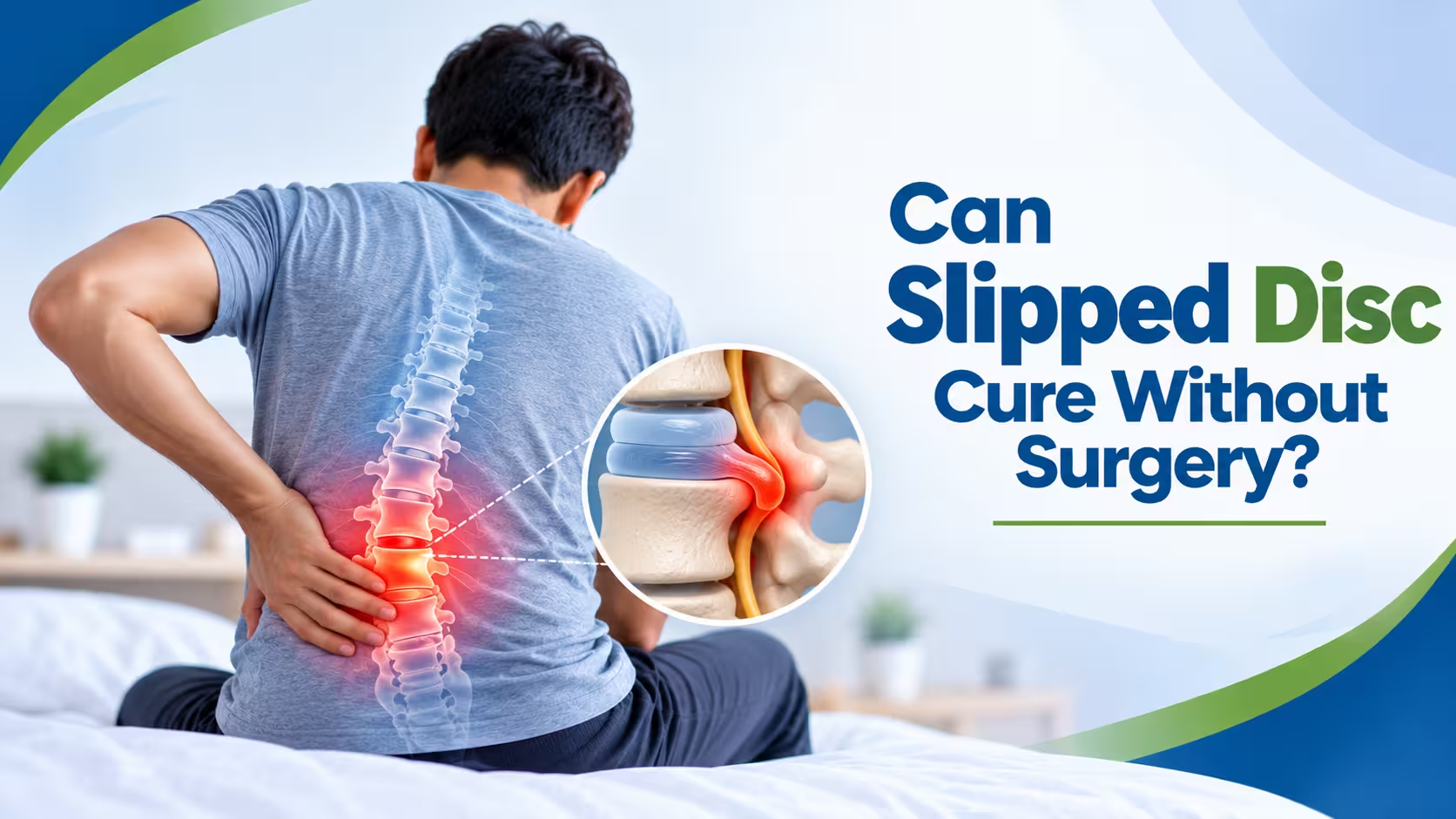
Quick Summary
-
A slipped disc often improves without surgery, although recovery varies from person to person.
-
Treatment may include physiotherapy, appropriate medication, activity modification, and posture correction.
-
Many people notice improvement within several weeks, while some need months of rehabilitation.
-
Surgery may be considered if pain remains disabling despite appropriate treatment or significant nerve problems develop.
-
New bladder or bowel dysfunction, numbness around the groin, or rapidly worsening leg weakness requires emergency medical evaluation.
If you have been diagnosed with a slipped disc, one of your first questions may be whether you can recover without undergoing surgery.
The good news is that a slipped disc does not automatically mean you need an operation. Many cases can be managed with non-surgical treatment, particularly when there is no progressive neurological weakness or other serious complication.
A slipped disc, also called a herniated disc, occurs when material from an intervertebral disc protrudes through its outer layer. Depending on its location, it may irritate nearby nerves and cause back pain, neck pain, sciatica, tingling, numbness, or weakness.
The right treatment depends on the severity of your symptoms, the location of the affected disc, and whether the nerves are compressed. Understanding your options can help you make an informed decision with your spine specialist.
Can a Slipped Disc Heal Without Surgery?
Yes. Many people with a slipped disc improve without surgery through conservative treatment and gradual rehabilitation.
The body can sometimes reduce the size of herniated disc material through a natural process called disc resorption. In other cases, the disc may continue to look abnormal on imaging while the inflammation around the affected nerve settles and symptoms improve.
This means that recovery does not always require the disc to return completely to its original shape.
The likelihood of improvement depends on several factors, including:
-
The location and type of disc herniation
-
The severity of nerve irritation or compression
-
Whether symptoms are improving or worsening
-
The presence of muscle weakness or sensory changes
-
Overall health and activity levels
-
Response to physiotherapy and other treatments
Important: Not every slipped disc heals in the same way. A doctor should assess persistent or severe symptoms to determine whether non-surgical treatment is appropriate.
What Is Non-Surgical Treatment for a Slipped Disc?
Non-surgical treatment focuses on reducing pain, improving movement, supporting the spine, and helping you return to everyday activities.
1. Physiotherapy and Rehabilitation
Physiotherapy is an important part of treatment for many people with a slipped disc.
A physiotherapist can develop an exercise plan based on the affected spinal region, your symptoms, and your physical capabilities.
A rehabilitation program may include:
-
Gentle mobility exercises
-
Core strengthening for lumbar disc problems
-
Postural training
-
Gradual flexibility exercises
-
Walking and activity progression
-
Education on safe lifting and body mechanics
The exercises should be individualized. A movement that relieves one person's symptoms may aggravate another person's pain.
If an exercise causes increasing leg pain, arm pain, numbness, or weakness, stop and seek professional guidance.
2. Medication for Pain and Inflammation
Doctors may recommend medication to help manage pain while the affected area recovers.
Depending on your medical history and symptoms, options may include anti-inflammatory medicines or other pain-relief medications. Muscle relaxants may occasionally be prescribed for selected patients with significant muscle spasm.
These medicines are not suitable for everyone. For example, some anti-inflammatory drugs can be risky for people with kidney disease, stomach ulcers, certain cardiovascular conditions, or specific medication interactions.
Use medication only as advised by a qualified healthcare professional. Medication can help control symptoms, but it does not necessarily remove the disc herniation itself.
3. Activity Modification
When you have a slipped disc, complete bed rest is generally not the preferred approach for uncomplicated cases.
Instead, activity modification involves temporarily avoiding movements that aggravate symptoms while maintaining gentle movement as tolerated.
You may need to modify:
-
Heavy lifting
-
Repeated bending and twisting
-
Prolonged sitting
-
Activities that trigger shooting leg or arm pain
-
High-impact exercise during an acute flare-up
Short walks and regular changes of position may help maintain mobility. Increase activity gradually and follow your clinician's advice.
4. Posture Correction and Ergonomic Changes
Poor movement habits and prolonged static positions can aggravate symptoms in some people with disc problems.
To support recovery:
-
Keep your workstation at a comfortable height.
-
Support your lower back while sitting.
-
Keep your feet supported when seated.
-
Take regular breaks from prolonged sitting.
-
Bend at the hips and knees when lifting.
-
Keep loads close to your body.
-
Avoid sudden twisting while carrying heavy objects.
Posture correction cannot reverse a herniated disc, but it may reduce unnecessary strain and make daily activities more comfortable.
5. Heat or Cold Therapy
Cold packs may help some people manage acute discomfort, while heat may relieve muscular tightness.
If you use either method, wrap the pack in a towel and apply it for a short period rather than placing extreme temperatures directly on your skin.
Stop if the treatment irritates your skin or worsens your symptoms. Heat and cold provide symptom relief; neither directly repairs a herniated disc.
6. Epidural Steroid Injections
For selected patients with persistent radiating pain caused by nerve-root inflammation, a specialist may consider an epidural steroid injection.
The aim is to reduce inflammation and provide temporary pain relief so that the patient can participate more comfortably in rehabilitation.
Injections do not permanently correct every disc problem, and their benefits vary. They are not appropriate for all patients and should be considered only after a clinical assessment.
How Long Does a Slipped Disc Take to Heal Without Surgery?
Recovery time varies according to the location of the disc herniation, symptom severity, nerve involvement, and response to treatment.
|
Recovery stage |
What may happen |
|---|---|
|
First few weeks |
Pain management, activity modification, and assessment of symptoms |
|
Around 4–6 weeks |
Some people notice meaningful improvement in pain and mobility |
|
Around 6–12 weeks |
Rehabilitation may focus on improving strength and daily function |
|
Several months |
Some patients need additional treatment or reassessment if symptoms persist |
These are general time frames, not guaranteed milestones. Some people improve sooner, while others take longer.
A person with persistent severe pain, progressive weakness, or other warning signs should not wait for a routine recovery period to pass before seeking medical evaluation.
When Does a Slipped Disc Require Surgery?
Although many slipped discs improve without surgery, an operation may be appropriate in certain circumstances.
1. Persistent Pain Despite Conservative Treatment
If severe or disabling pain continues despite an appropriate course of non-surgical treatment, a spine specialist may discuss surgical options.
The decision depends on the symptoms, examination findings, imaging results, and how much the condition affects daily life.
2. Progressive Muscle Weakness
Increasing weakness in the leg, foot, arm, or hand may indicate significant nerve compression.
This requires prompt medical evaluation. Depending on the severity and cause, urgent surgery may be necessary.
3. Severe Nerve Compression
A herniated disc can compress a nerve root and cause substantial pain, sensory changes, or weakness. Surgery may be considered when the clinical findings and imaging show that decompression is likely to help.
4. Cauda Equina Syndrome
Cauda equina syndrome is a rare but serious condition involving compression of the nerves at the lower end of the spinal canal.
Seek emergency medical care immediately if you develop new loss of bladder or bowel control, difficulty passing urine, numbness around the groin or saddle area, or rapidly progressing leg weakness.
Do not attempt to manage these symptoms with home exercises or wait for a scheduled appointment.
Factors That Affect Slipped Disc Recovery
Several factors may influence how quickly you improve.
Location of the Herniated Disc
A lumbar disc herniation may cause lower back pain and sciatica, while a cervical disc herniation can cause neck pain and symptoms extending into the shoulder, arm, or hand.
The location affects which treatments and exercises may be appropriate.
Severity of Nerve Compression
Some people have pain without significant muscle weakness. Others may have sensory changes or neurological deficits that require closer monitoring.
Progressive weakness or serious neurological symptoms change the treatment priorities and may require urgent intervention.
Overall Health and Lifestyle
Maintaining a healthy weight, avoiding smoking, staying appropriately active, and following a personalized rehabilitation program can support overall spinal health.
These habits do not guarantee that a disc will heal, but they can contribute to better function and long-term management.
Consistency With Rehabilitation
Following a suitable exercise program and gradually returning to activity can help restore strength and confidence in movement.
However, consistency does not mean pushing through severe pain. Rehabilitation should be adjusted if symptoms worsen.
Signs That Your Slipped Disc Is Improving
Improvement is not always a sudden event. It may happen gradually over several weeks.
Signs of progress can include:
-
Reduced intensity or frequency of pain
-
Less pain spreading into the arm or leg
-
Improved walking or sitting tolerance
-
Easier movement during daily activities
-
Better sleep
-
Improved strength and mobility
-
Reduced need for pain medication, when medically appropriate
Some days may be better than others. A temporary increase in discomfort does not necessarily mean the disc has become worse, but persistent deterioration deserves reassessment.
What Happens If You Do Not Treat a Slipped Disc?
Not every slipped disc requires a specific procedure, and some improve with time and appropriate self-care.
However, ignoring persistent symptoms can delay diagnosis of nerve compression or another underlying condition. In some cases, untreated or worsening nerve compression may lead to lasting neurological problems.
Seek a medical assessment if you have ongoing radiating pain, numbness, weakness, or difficulty performing normal activities. Emergency symptoms such as bladder or bowel dysfunction require immediate care.
Can You Prevent a Slipped Disc From Happening Again?
You cannot prevent every disc injury, but certain habits may help support spinal health and reduce avoidable strain.
-
Exercise regularly within your abilities.
-
Strengthen the muscles supporting your spine with appropriate guidance.
-
Use safe lifting techniques.
-
Avoid smoking.
-
Maintain a healthy weight.
-
Break up long periods of sitting.
-
Gradually increase activity after a flare-up.
-
Follow your clinician's advice about returning to sport or heavy work.
If you have already experienced a herniated disc, a tailored rehabilitation plan may help you return to activities more safely.
Slipped Disc Treatment
If you are experiencing persistent back pain, neck pain, sciatica, tingling, or numbness, an evaluation by a spine specialist can help determine whether a slipped disc is responsible for your symptoms.
Treatment may involve physiotherapy, medication, activity modification, injections, or surgery when indicated. Not every patient needs an operation, and not every patient is suitable for conservative treatment alone.
For patients seeking slipped disc treatment in Gurgaon, Dr. Dheeraj Batheja can assess the symptoms and help determine the next appropriate step based on the clinical examination and relevant imaging.
About Dr. Dheeraj Batheja
Dr. Dheeraj Batheja is a Spine Surgeon in Gurgaon with 13+ years of experience, having treated 25,000+ patients and performed 5,000+ spine surgeries.
His approach focuses on evaluating the underlying spinal condition and selecting treatment according to each patient's symptoms, neurological findings, imaging, and functional needs.
Patients experiencing a slipped disc, sciatica, persistent back pain, or neck-related nerve symptoms can seek an evaluation to understand their available treatment options.
Frequently Asked Questions
1. Can a slipped disc cure permanently without surgery?
Many people achieve lasting symptom relief without surgery. However, a disc may remain structurally abnormal, and symptoms can sometimes recur. Long-term results depend on the underlying condition, nerve involvement, and overall spinal health.
2. How long does a slipped disc take to heal without surgery?
Some people improve within a few weeks, while others need several months. Recovery depends on the severity of the herniation, the symptoms, and the response to treatment.
3. Is walking good for a slipped disc?
Gentle walking is often suitable for people with uncomplicated slipped discs, provided it does not worsen their symptoms. Start with a comfortable duration and increase gradually.
4. Can physiotherapy cure a slipped disc?
Physiotherapy can help reduce symptoms, improve movement, and strengthen supporting muscles. It cannot guarantee that the disc will return to its original structure, and the program should be tailored to the patient's condition.
5. Can a slipped disc heal naturally?
Yes, symptoms often improve over time, and some herniated disc material can gradually be reabsorbed by the body. The extent of recovery varies, so persistent or worsening symptoms should be assessed.
6. What happens if a slipped disc is left untreated?
Some cases improve without specific treatment. Others may cause persistent pain, reduced mobility, or nerve-related symptoms. Progressive weakness or bladder and bowel changes require urgent medical evaluation.
7. When should I consider surgery for a slipped disc?
Surgery may be considered when disabling symptoms persist despite appropriate conservative treatment or when significant nerve compression causes neurological problems. The decision should be based on clinical assessment and imaging.
8. Can a slipped disc cause knee pain?
Yes. A lumbar nerve problem can cause referred or radiating pain into parts of the leg, sometimes including the knee. Knee pain also has many other possible causes, so an examination may be needed to determine the source.
9. Can a slipped disc in the neck heal without surgery?
Many cervical disc herniations improve with appropriate non-surgical treatment. However, new or progressive arm or hand weakness, difficulty walking, or balance problems require prompt medical assessment.
10. Can I exercise with a slipped disc?
Appropriate exercise may support recovery, but the correct movements depend on the affected spinal region and symptoms. Avoid exercises that worsen radiating pain, numbness, or weakness, and seek professional guidance if symptoms are significant.
Latest Article
What Causes Neck Pain After Waking Up
Slipped Disc: Causes, Symptoms
What Are the Symptoms of Severe Lower Left Back Pain?
Which Exercises Are Safe for Cervical Spondylosis?
Final Takeaway
A slipped disc often improves without surgery, but the right treatment depends on the individual case. Physiotherapy, appropriate medication, activity modification, and gradual rehabilitation can help many people manage pain and regain function.
Surgery is an important option when conservative treatment does not provide adequate relief or when serious nerve compression requires intervention. Do not delay emergency care for new bladder or bowel dysfunction, numbness around the groin, or rapidly worsening weakness.
Medical disclaimer: This article is for educational purposes and does not replace a medical consultation, diagnosis, or individualized treatment plan.