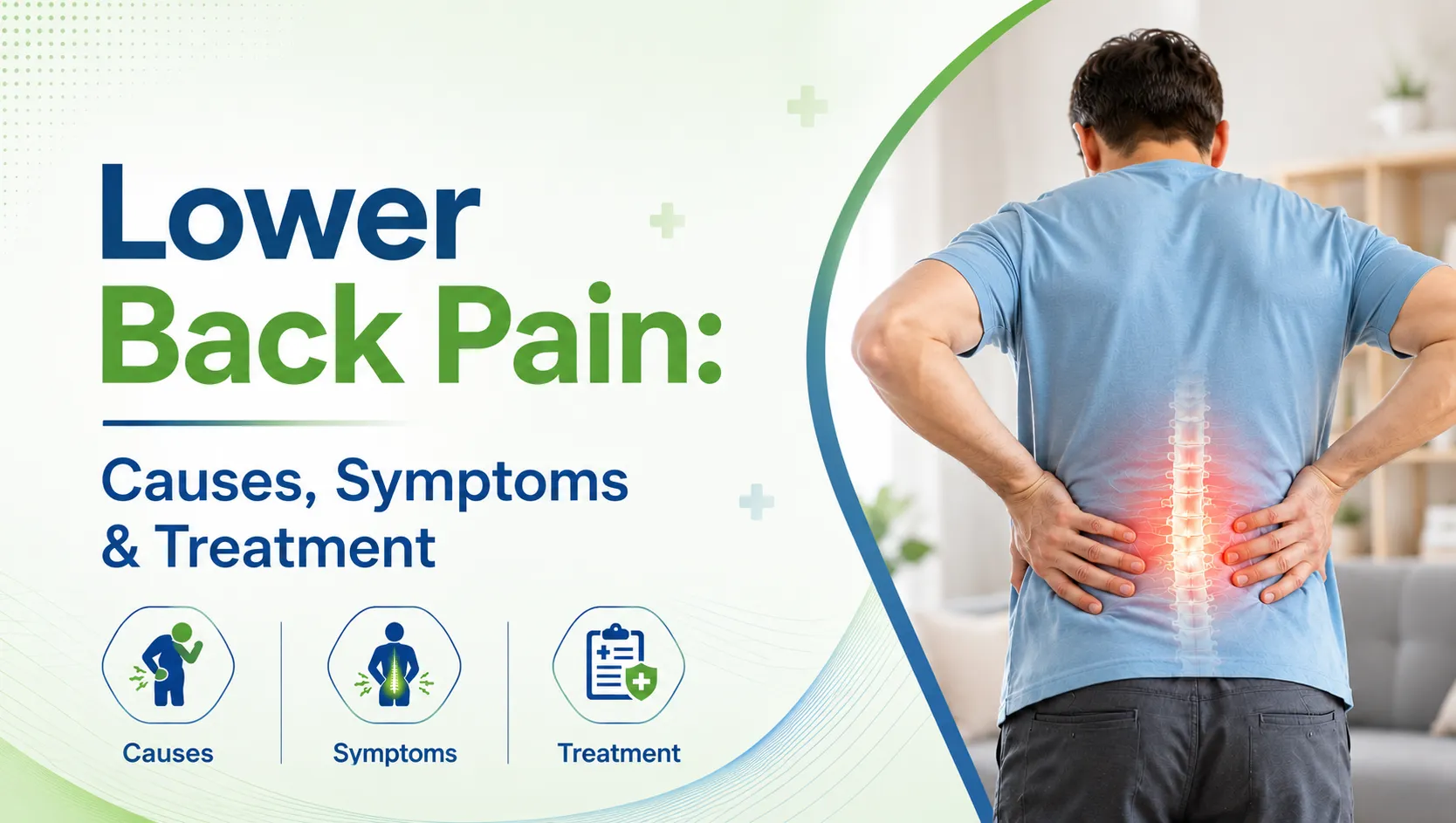
Lower back pain is one of the most common health problems affecting people of all ages. It can make everyday activities such as getting out of bed, sitting for long hours, driving, walking, or even bending down to tie your shoelaces uncomfortable and difficult. While occasional back pain is common, persistent or recurring pain should not be ignored.
The lower back, also known as the lumbar spine, supports much of your body weight and plays an important role in nearly every movement you make. Because of this, it is particularly vulnerable to strain, injury, and age-related wear and tear. The good news is that most cases of lower back pain can be effectively managed with the right diagnosis and treatment.
In this blog, we will discuss the common causes of lower back pain, lower back pain symptoms, available treatment options, and when you should consider consulting a spine specialist.
What Is Lower Back Pain?
Lower back pain refers to pain or discomfort in the lumbar spine, the lower part of the back located between the ribs and the hips. It is one of the most common musculoskeletal conditions and can affect people of all ages. The pain may range from a mild ache to severe discomfort that interferes with daily activities such as walking, sitting, standing, or bending.
Lower back pain can develop suddenly due to an injury or gradually over time because of poor posture, muscle strain, disc problems, or age-related changes in the spine. Some people experience a dull, constant ache, while others may feel sharp pain, stiffness, or pain that radiates into the buttocks and legs.
Common Lower Back Pain Causes
Understanding the pain in lower back causes can help identify the underlying problem and determine the most appropriate treatment approach.
1. Muscle Strain and Ligament Injury
It is among the most frequently cited reasons for lower back discomfort. A sudden twist, poor lifting, excessive exercise, or repetitive movements can stress ligaments and muscles of the lower back.
2. Herniated or Slipped Disc
The discs that are found around the vertebrae of the spine act as cushions. If a disc bulges or ruptures, it could result in nerves being compressed, triggering the sensation of numbness or pain as well as the feeling of burning.
3. Degenerative Disc Disease
The discs of the spine slowly lose water and are less flexible as you age. This can cause chronic back pain.
4. Sciatica
Sciatica is the result of the irritation or compression of the sciatic nerve. The pain is typically located at the back of your lower lumbar region, and it can radiate to the leg.
5. Spinal Stenosis
It is characterised by a narrowing in the spinal canal, which causes pressure to be placed on nerves. It affects people who are older and causes discomfort in the legs.
6. Arthritis
Arthritis may also attack the joints in your spine, causing inflammation, stiffness, and pain in your back.
7. Posture Problems
Working at a desk for extended periods, poor posture during work, and improper body posture add extra pressure to the back muscles.
8. Weak Back Muscles
Weak back muscles cause you to be vulnerable to injuries because your back muscles protect your spine from strain and damage.
9. Lower Left Back Pain Causes
If you experience lower left back pain, possible causes may include:
-
Muscle strain on the left side
-
Kidney stones or kidney infections
-
Sciatica affecting the left side
-
Sacroiliac joint dysfunction
-
Spinal disc problems
A proper medical evaluation is necessary to determine the exact cause.
Symptoms of Lower Back Pain
The symptoms can differ based on the root cause.
Common symptoms are:
-
A dull ache from the back of your lower spine
-
Pain that is sharp or stabbing
-
Muscle spasms
-
The stiffness and decreased flexibility
-
Trouble standing up
-
Pain that gets worse as you move
-
Inflammation radiating into the buttocks or the legs
-
The sensation of tingling or numbness
-
The legs are weak and weak
Some individuals may suffer from symptoms only when they are physically exercising, whereas others may be constantly uncomfortable.
Risk Factors for Low Back Pain
Certain circumstances increase the chance of developing lower back pain.
They include:
-
Increasing age
-
Obesity
-
A lifestyle that is sedentary
-
Smoking
-
Physically demanding work
-
Heavy lifting frequently
-
Poor posture
-
Inactivity and lack of routine
-
Injuries resulting from sports
People who work for long periods of time, working at a desk, are also more at risk.
When Should You See a Spine Specialist?
Although many patients improve after several weeks, certain symptoms warrant medical treatment.
Speak to a spine specialist when you suffer from:
-
Insomnia or worsening pain
-
The pain lasts longer than a couple of weeks
-
A throbbing pain that spreads down the legs
-
Apathy or numbness in the legs
-
Walking is difficult
-
Inability to control the bladder or the ability to control the bowels
-
Injuries following an injury or accident
These symptoms could be a sign of nerve compression or an even more serious spinal issue.
How Is Lower Back Pain Diagnosed?
To identify the exact cause, your doctor may recommend:
Medical History and Physical Examination
The doctor will evaluate your symptoms, movement, posture, muscle strength, and nerve function.
Imaging Tests
Depending on your condition, imaging tests may include:
-
X-rays
-
MRI scans
-
CT scans
These tests help identify disc problems, arthritis, spinal stenosis, fractures, or nerve compression.
Lower Back Pain Treatment Options
The treatment is based on the root cause, severity, and duration of symptoms. The primary goal of treatment is to provide lower back pain relief, improve mobility, and help patients return to their daily activities.
Conservative Treatments
The majority of patients will improve after non-surgical treatments.
Rest and Activity Modification
Restful periods of time combined with a gradual return to activities can help ease symptoms. Complete bed rest is generally not advised.
Medications
Doctors can prescribe:
-
Pain alleviation medications
-
Anti-inflammatory drugs
-
Relaxing agents for muscles
-
These decrease inflammation and pain.
Physical Therapy
Physical therapy focuses on:
-
Improving flexibility
-
Strengthening core muscles
-
Correcting posture
-
Reducing pain
It is one of the most effective treatments for chronic low back pain.
Lifestyle Modifications
Simple adjustments could make a huge difference:
-
A healthy weight and maintaining it
-
Keeping physically active
-
Improving workplace ergonomics
-
Avoiding sitting for too long
-
Training in correct lifting techniques
Advanced Treatments
When conservative treatments fail, advanced options may be considered.
These may include:
-
Epidural steroid injections
-
Nerve blocks
-
Radiofrequency procedures
The choice depends on the underlying diagnosis and severity of symptoms.
Surgical Treatment
Surgery is usually recommended only when:
-
Severe nerve compression exists
-
Symptoms persist despite treatment
-
Significant weakness develops
-
Spinal instability is present
Modern minimally invasive spine surgery can alleviate pain and improve the function of your spine with smaller incisions as well as quicker recovery.
Tips to Prevent Lower Back Pain
You can lower your risk of developing back pain by following these habits:
-
Exercise regularly
-
Build core muscles
-
Maintain an appropriate weight
-
Make sure you are in to maintain a good posture
-
Be sure to lift heavy objects safely
-
Do not smoke
-
Pause frequently from sitting for long periods of time.
-
Utilize an ergonomic workstation
Prevention is usually simpler than addressing back pain that has developed over time.
Conclusion
Lower back pain is a common condition that can affect people of all ages and may result from muscle strain, poor posture, slipped discs, age-related spinal changes, or other spine conditions. Recognizing the causes of lower back pain and identifying lower back pain symptoms early can help prevent complications and support faster recovery.
While many cases improve with rest, lifestyle changes, and physical therapy, some may require specialized treatment for effective lower back pain relief. If your symptoms persist, worsen, or begin to affect your daily activities, seeking timely medical evaluation is important.
If you have been experiencing chronic lower back pain, you can consult Dr. Dheeraj Batheja, recognized as one of the best spine surgeons in Gurgaon, with 13+ years of experience in diagnosing and treating a wide range of spine conditions.
Frequently Asked Questions
1. Is low back pain a big deal?
No, it isn’t, as most instances are not serious and can be treated without surgery. However, if the symptoms persist, you should see a doctor.
2. What is the main reason for low back pain?
One of the most frequent reasons for low back pain is muscle strain.
3. What could be causing my low back pain on the left side?
There are a variety of reasons for this problem – muscle strain, sciatica, problems with the kidneys, or other disorders of the spine.
4. How long does low back pain last?
The duration of acute back pain is estimated to range from several days to several weeks, whereas chronic pain might require continuous treatment.
5. Does walking help with low back pain?
Indeed, walking will benefit many people suffering from low back pain.