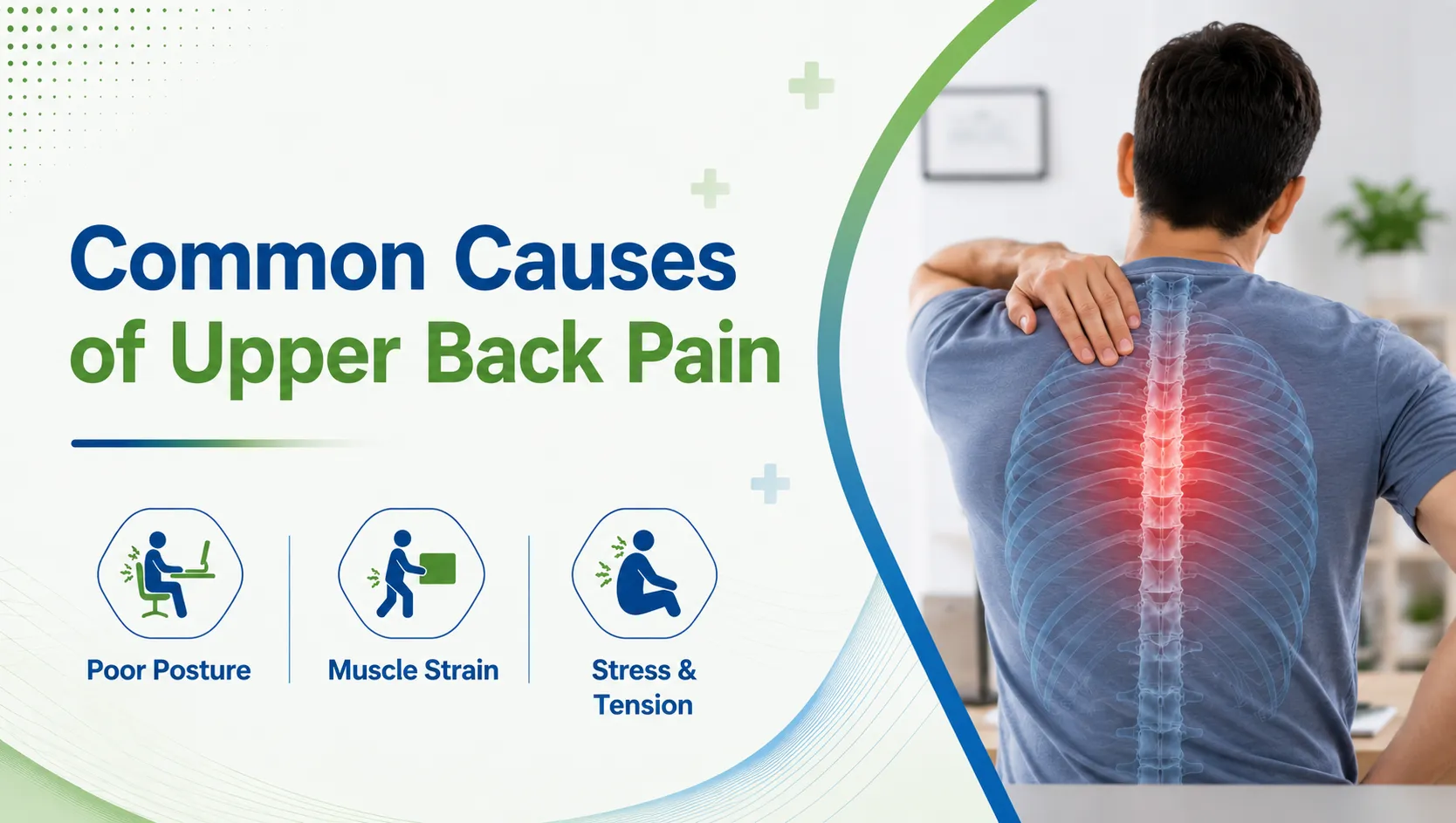
Upper back pain is most often caused by muscle strain, poor posture, or irritation in the muscles and ligaments supporting the thoracic spine.
Common Mechanical Causes
- Muscle strain or sprain: Overworking back muscles or lifting heavy objects incorrectly tears muscle fibers or ligaments.
- Poor posture: Slouching at a desk or looking down at phones (tech neck) strains upper back structures over time.
- Myofascial pain: Irritation or sensitive knots (trigger points) develop in the connective tissues of the muscles.
- Joint dysfunction: Misalignment or stiffness occurs in the small joints connecting the ribs to the thoracic spine
Spine and Structural Conditions
- Herniated or degenerated discs: Cushioning discs between the vertebrae bulge or break down and press on nerves.
- Vertebral compression fractures: Weakened bones, often from osteoporosis, collapse or crack.
- Spinal curvatures: Conditions like scoliosis or kyphosis put uneven pressure on the back.
- Osteoarthritis: Cartilage protecting the spinal joints wears away.
What Is Upper Back Pain?
Upper back pain refers to pain, stiffness, soreness, or discomfort in the thoracic spine—the section of the spine located between the neck (cervical spine) and lower back (lumbar spine).
People describe the condition in different ways, including:
- Upper back ache
- Sore upper back
- Upper spine pain
- Upper spinal cord pain
- Upper back discomfort
- High back pain
- Top of spine pain
- Pain in the upper back
- Upper back muscle pain
- Upper back strain
The pain may develop suddenly after an injury or gradually because of poor posture, repetitive movements, prolonged sitting, or age-related spinal changes.
Unlike lower back pain, upper back pain is less common because the thoracic spine is naturally more stable. However, when it occurs, it can significantly interfere with work, exercise, sleep, and daily activities.
Types of Upper Back Pain
Understanding the type of pain helps identify its possible cause.
Dull or Aching Upper Back Pain
An aching upper back pain usually develops due to muscle fatigue, prolonged sitting, or poor posture. Many office workers experience this type of upper backache after spending several hours in front of a computer.
Sharp Pain in the Upper Back
A sharp pain in the upper back may occur because of muscle injury, ligament strain, rib joint irritation, or nerve compression. The pain often worsens during movement, coughing, or deep breathing.
Upper Back Muscle Pain
Inflamed upper back muscles are one of the leading causes of soreness across the upper back. Muscle overuse, gym injuries, lifting heavy objects, or repetitive activities commonly trigger this type of pain.
Chronic Upper Back Pain
Chronic upper back pain refers to pain lasting longer than 12 weeks. It may be associated with arthritis, spinal degeneration, osteoporosis, or chronic muscle imbalance.
Severe Upper Back Pain
Severe upper back pain or extreme upper back pain should never be ignored, especially if it develops suddenly after trauma or is associated with numbness, weakness, fever, chest pain, or difficulty breathing. Immediate medical evaluation is recommended in such cases.
Symptoms of Upper Back Pain
Symptoms vary depending on the underlying condition. Some people experience only mild soreness, while others develop persistent pain that affects their daily routine.
Common symptoms include:
- Upper back ache or soreness
- Upper spine pain
- Upper back stiffness
- Upper back muscle pain
- Pain between the shoulder blades
- Upper back and shoulder pain
- Pain in the upper back and shoulders
- Neck stiffness
- Pain while twisting or bending
- Burning sensation in the upper spine
- Tingling or numbness
- Pain radiating to the ribs or chest
- Reduced flexibility
- Difficulty sitting for long periods
- Constant upper back ache
- Sore upper back muscles
- Upper back stiff and sore
Some individuals notice that the pain is worse in the morning, while others experience increasing discomfort after prolonged sitting or standing.
What Causes Upper Back Pain?
Several muscles, joints, discs, ligaments, and nerves work together to support the thoracic spine. When any of these structures become injured, inflamed, or compressed, upper back pain can develop.
The most common upper back pain causes include:
- Poor posture
- Upper back strain
- Muscle overuse
- Herniated thoracic disc
- Arthritis
- Osteoporosis
- Spinal injuries
- Rib joint dysfunction
- Stress-related muscle tension
- Scoliosis
- Degenerative disc disease
- Shoulder disorders
Let's discuss each cause in detail.
1. Poor Posture
Poor posture remains the leading cause of upper back pain worldwide.
Looking down at mobile phones, working on laptops, driving for long periods, or sitting without back support places excessive pressure on the thoracic spine and surrounding muscles.
Over time, poor posture can lead to:
- Upper back discomfort
- Top of spine pain
- Upper spine pain
- Sore upper back
- Pain between the shoulder blades
- Upper back and shoulder pain
- Constant upper back ache
Improving posture and making ergonomic adjustments at work can significantly reduce symptoms.
2. Upper Back Strain and Muscle Overuse
Upper back strain occurs when muscles or ligaments are overstretched due to excessive physical activity or sudden movement.
Common causes include:
- Heavy lifting
- Gym injuries
- Repetitive overhead work
- Carrying heavy backpacks
- Sports injuries
- Sudden twisting movements
Symptoms often include:
- Achy upper back
- Inflamed upper back muscles
- Sore upper back muscles
- Pain during movement
- Muscle spasms
- Difficulty lifting the arms
Most mild muscle strains improve with rest, ice therapy, and physical therapy.
3. Herniated Thoracic Disc
Although less common than cervical or lumbar disc problems, a herniated thoracic disc can cause persistent upper spine pain and nerve-related symptoms. It occurs when the soft center of a spinal disc pushes through its outer layer and irritates nearby nerves.
People with a thoracic disc herniation may experience:
- Sharp pain in the upper back
- Burning pain around the shoulder blades
- Upper center back pain
- Tingling or numbness
- Pain that radiates around the chest or ribs
- Weakness in severe cases
Unlike a simple upper back strain, disc-related pain often lasts longer and may worsen with coughing, sneezing, or prolonged sitting. If nerve compression is suspected, your doctor may recommend an MRI to confirm the diagnosis.
4. Arthritis of the Thoracic Spine
As people age, the joints in the thoracic spine gradually undergo wear and tear. This condition, known as spinal arthritis or thoracic spondylosis, can lead to chronic inflammation and stiffness.
Common symptoms include:
- Chronic upper back pain
- Morning stiffness
- Upper back spine pain
- Aching upper back pain
- Reduced flexibility
- Pain during twisting or bending
The pain usually develops gradually and may become more noticeable after long periods of inactivity.
5. Pain Between the Shoulder Blades
Pain between the shoulder blades is one of the most common upper back problems seen by spine specialists.
It may result from:
- Poor posture
- Tight trapezius muscles
- Rhomboid muscle strain
- Thoracic spine disorders
- Stress-related muscle tension
- Shoulder joint problems
Many people first notice soreness after working on a computer, driving long distances, or carrying heavy bags.
Although muscle strain is the most common cause, persistent pain between the shoulder blades may occasionally indicate problems involving the spine, lungs, heart, or digestive organs. Medical evaluation is recommended if the pain is severe, sudden, or associated with chest discomfort or difficulty breathing.
6. Upper Right Back Pain
Many patients ask, "Why does my upper right back hurt?"
Upper right back pain can develop for several reasons, including muscle strain, poor posture, irritated facet joints, rib injuries, nerve irritation, or spinal disorders.
Symptoms may include:
- Upper right back ache
- Pain in upper right back
- Pain in right upper back side
- Top right back pain
- Back pain at upper right side
- Pain in right side of upper back
- Back pain right side upper back
- Upper right back hurts during movement
In some cases, pain on the right side may also be related to gallbladder disease or liver conditions. If the pain is associated with fever, abdominal pain, nausea, or vomiting, immediate medical evaluation is important.
7. Upper Left Back Pain
Pain on the left side of the upper back is commonly caused by muscle strain, poor posture, or repetitive movements. However, persistent pain should not be ignored because it may occasionally indicate nerve compression or, less commonly, heart-related conditions.
Symptoms may include:
- Upper left back pain
- Upper left back ache
- Upper left side back pain
- Upper left back discomfort
- Pain in upper back left side
- Pain in left side of upper back
- Left side back pain upper
- Back pain left upper back
- Discomfort in upper back left side
Seek emergency medical care if upper left back pain occurs with chest pain, shortness of breath, dizziness, or pain radiating into the jaw or left arm.
8. Stress and Muscle Tension
Stress affects more than your mental health—it can also tighten the muscles of your neck, shoulders, and upper back.
When muscles remain tense for prolonged periods, they may develop painful trigger points or muscle knots.
Stress-related symptoms often include:
- Sore upper back
- Upper back muscle pain
- Upper back stiff and sore
- Tight shoulders
- Neck stiffness
- Frequent headaches
- Soreness across upper back
Relaxation exercises, stretching, meditation, and regular physical activity often help reduce stress-related upper back pain.
9. Osteoporosis and Compression Fractures
Osteoporosis weakens the bones, making the vertebrae more susceptible to fractures, particularly in older adults and postmenopausal women.
A compression fracture may cause:
- Sudden severe upper back pain
- Top of spine pain
- Upper spine pain
- Difficulty standing upright
- Loss of height over time
Early diagnosis and treatment can help prevent additional fractures.
10. Scoliosis and Spinal Deformities
Abnormal curvature of the spine may place uneven stress on muscles and joints, leading to chronic upper back discomfort.
People with scoliosis may notice:
- Uneven shoulders
- Muscle fatigue
- Upper back ache
- Shoulder blade prominence
- Persistent upper back pain
Upper Back Pain in Women
Many women search online for female upper back pain causes, upper back pain reasons for ladies, or women's upper back pain reasons.
Although many causes are the same as in men, certain conditions are more common in women.
These include:
- Pregnancy-related posture changes
- Large breasts causing muscular strain
- Osteoporosis after menopause
- Hormonal changes
- Vitamin D deficiency
- Stress and anxiety
- Poor workstation ergonomics
Upper back pain causes in women may also include inflammatory conditions or breast-related disorders. Persistent or unexplained pain should always be evaluated by a healthcare professional.
When Is Upper Back Pain Serious?
Most episodes of upper back pain improve within a few weeks. However, some symptoms require prompt medical attention.
Consult a spine specialist if you experience:
- Severe upper back pain that begins suddenly
- Extreme upper back pain after an accident
- Constant upper back ache lasting more than two weeks
- Pain with numbness or weakness
- Difficulty walking
- Loss of bladder or bowel control
- Fever or unexplained weight loss
- Pain that spreads into the chest or arms
- Pain that wakes you from sleep every night
Early diagnosis can help prevent permanent nerve damage and improve recovery.
How Is Upper Back Pain Diagnosed?
Your spine specialist will begin by reviewing your medical history, symptoms, and daily activities before performing a physical examination.
Depending on the suspected cause, investigations may include:
- X-rays to evaluate bones and spinal alignment
- MRI to identify disc herniation or nerve compression
- CT scan for detailed bone imaging
- Bone density testing if osteoporosis is suspected
- Blood tests when infection or inflammatory disease is considered
Accurate diagnosis is essential because treatment varies depending on the underlying cause.
Upper Back Pain Treatment
The best upper back pain treatment depends on the underlying diagnosis. Most people improve with non-surgical care, while surgery is reserved for selected spine conditions.
Common treatment options include:
Physical Therapy
A structured rehabilitation program helps strengthen the back muscles, improve posture, increase flexibility, and reduce pain recurrence.
Medications
Doctors may prescribe pain relievers, anti-inflammatory medicines, or muscle relaxants to reduce discomfort during recovery.
Lifestyle and Ergonomic Changes
Simple adjustments such as maintaining good posture, using an ergonomic chair, taking regular breaks, and avoiding prolonged sitting can significantly reduce upper back pain.
Heat and Ice Therapy
Applying ice during the first 48 hours after an injury helps reduce inflammation, while heat therapy relaxes tight muscles and improves blood circulation.
Spine Injections
Patients with persistent nerve-related pain may benefit from image-guided spinal injections to reduce inflammation and improve mobility.
Spine Surgery
If symptoms are caused by significant nerve compression, spinal instability, or severe disc disease that does not respond to conservative treatment, minimally invasive or advanced spine surgery may be recommended.
Home Remedies for Upper Back Pain
If your upper back pain is caused by poor posture, muscle strain, or overuse, simple self-care measures can help relieve symptoms and speed up recovery.
1. Apply Ice During the First 48 Hours
Ice packs help reduce inflammation and swelling after a muscle injury or upper back strain. Apply an ice pack for 15–20 minutes every 3–4 hours during the first two days.
2. Use Heat Therapy
After the initial inflammation settles, heat therapy helps relax tight muscles, improve blood circulation, and reduce stiffness. Warm compresses, heating pads, or a warm shower can provide relief from a sore upper back.
3. Correct Your Posture
Poor posture is one of the leading upper back pain causes. Keep your shoulders relaxed, avoid slouching, and position your computer screen at eye level. Small ergonomic improvements at work and home can significantly reduce upper back discomfort.
4. Stay Active
Complete bed rest is rarely recommended. Gentle walking, light stretching, and regular movement help reduce muscle stiffness and improve circulation. Avoid activities that increase pain, but try not to remain inactive for long periods.
5. Improve Your Sleep Position
Sleeping on a supportive mattress and using a pillow that keeps your neck aligned with your spine can reduce pressure on the thoracic spine. Many people notice less upper back ache after improving their sleeping posture.
6. Manage Stress
Stress often causes muscles around the neck and shoulders to tighten, leading to soreness across the upper back. Deep breathing exercises, yoga, meditation, and regular physical activity can help relieve stress-related muscle tension.
Best Exercises for Upper Back Pain
Gentle stretching and strengthening exercises improve flexibility, posture, and muscle balance. Before starting any exercise program, consult your doctor or physical therapist if you have severe pain or an underlying spine condition.
Shoulder Rolls
Slow shoulder rolls help reduce muscle tension and improve mobility around the neck and upper back.
Thoracic Extension Stretch
This exercise improves mobility of the thoracic spine and helps reduce stiffness caused by prolonged sitting.
Cat-Cow Stretch
A gentle yoga exercise that increases flexibility throughout the spine while reducing muscle tightness.
Wall Angels
Wall angels strengthen the muscles responsible for maintaining proper posture and reduce strain on the upper spine.
Chin Tucks
Chin tuck exercises improve neck alignment and reduce forward head posture, a common contributor to upper back and shoulder pain.
Stop exercising and seek medical advice if any movement significantly increases your pain or causes numbness, weakness, or radiating symptoms.
How Can You Prevent Upper Back Pain?
Although not every cause can be prevented, healthy habits can greatly reduce the risk of developing upper back problems.
You can help protect your spine by:
- Maintaining good posture while sitting and standing
- Taking short breaks every 30–60 minutes if you work at a desk
- Exercising regularly to strengthen your back and core muscles
- Stretching before and after physical activity
- Lifting heavy objects correctly by bending your knees instead of your back
- Maintaining a healthy body weight
- Managing stress effectively
- Sleeping on a supportive mattress and pillow
- Avoiding prolonged use of mobile phones with your head bent forward
- Using ergonomic chairs and workstations
These lifestyle changes not only reduce the chances of upper back pain but also improve overall spinal health.
When Should You See a Spine Specialist?
Mild upper back pain often improves within a few days with rest and self-care. However, persistent or worsening symptoms should not be ignored.
Consult a spine specialist if:
- Your pain lasts longer than two weeks
- The pain keeps returning
- Home remedies do not provide relief
- The pain interferes with daily activities or sleep
- You experience numbness, tingling, or weakness in your arms or legs
- The pain follows an accident or fall
- You have difficulty walking or maintaining balance
- The pain is accompanied by fever, unexplained weight loss, or night sweats
- You develop chest pain, difficulty breathing, or pain radiating to the jaw or left arm
Timely evaluation can identify the underlying cause and help prevent long-term complications.
Conclusion
Upper back pain is a common condition that can range from mild muscle soreness to symptoms caused by underlying spine disorders. Poor posture, muscle strain, prolonged sitting, stress, arthritis, and thoracic disc problems are among the most common causes.
Most people experience significant improvement with posture correction, physical therapy, activity modification, and appropriate medical treatment. However, severe upper back pain, persistent symptoms, or pain associated with numbness, weakness, chest discomfort, or unexplained weight loss should always be evaluated by a spine specialist.
If you are experiencing ongoing upper back pain, upper spine pain, pain between the shoulder blades, or upper back and shoulder pain, consult Dr. Dheeraj Batheja, an experienced Spine Surgeon in Gurgaon. Early diagnosis and personalized treatment can help relieve pain, restore mobility, and prevent future spine problems.
Frequently Asked Questions
1. What Causes Upper Back Pain?
Upper back pain is most commonly caused by muscle strain, poor posture, prolonged sitting, repetitive movements, or ligament injuries. It can also result from spine conditions such as a herniated disc, arthritis, scoliosis, osteoporosis, or nerve compression.
2. Can Poor Posture Cause Upper Back Pain?
Yes. Poor posture is one of the leading causes of upper back pain. Slouching while sitting, working on a computer for long hours, or frequently looking down at a mobile phone can place extra strain on the muscles and joints of the upper spine, leading to pain and stiffness.
3. Can Stress Cause Upper Back Pain?
Yes. Emotional stress can cause the muscles in the neck, shoulders, and upper back to tighten, leading to pain, stiffness, and muscle knots. Regular stretching, exercise, relaxation techniques, and stress management can help relieve these symptoms.
4. Why Does My Upper Back Hurt Between My Shoulder Blades?
Pain between the shoulder blades is often caused by muscle strain, poor posture, prolonged sitting, stress, or thoracic spine problems. In some cases, it may also be related to nerve compression or underlying medical conditions, especially if the pain is persistent or severe.
5. When Should I See a Doctor for Upper Back Pain?
You should consult a doctor if your upper back pain lasts longer than two weeks, becomes severe, keeps returning, or is accompanied by numbness, weakness, fever, unexplained weight loss, chest pain, or difficulty walking. Early diagnosis can help identify the underlying cause and guide appropriate treatment.
6. Can Upper Back Pain Go Away on Its Own?
Yes. Mild upper back pain caused by muscle strain or poor posture often improves within a few days to a couple of weeks with rest, posture correction, gentle stretching, and activity modification. However, persistent or worsening pain should be evaluated by a spine specialist.