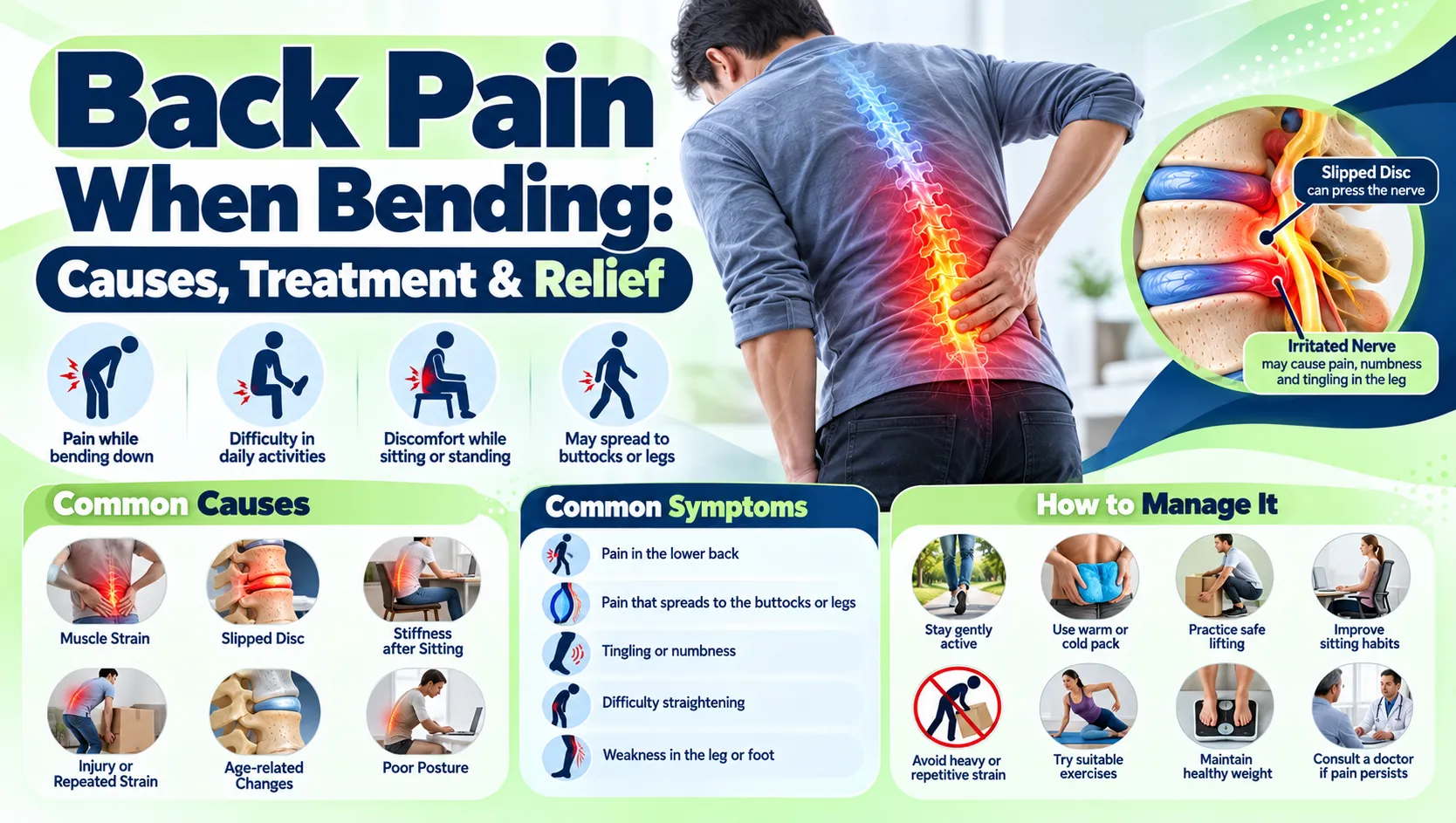
Back pain when bending down can make everyday activities, such as putting on shoes, lifting a bag, or standing up from a chair, uncomfortable. The pain may start suddenly or develop gradually, affecting the lower back and sometimes spreading to the buttocks or legs.
There are several possible causes, including muscle strain, a slipped disc, or other spinal conditions. While many cases improve with appropriate care, pain that spreads down the leg or is accompanied by numbness or weakness may require medical attention.
Understanding the cause of your back pain is the first step toward finding the right treatment. Here’s what may cause back pain when bending and how you can manage it.
Why Does Your Back Hurt When You Bend?
The lower back does a lot of work when you bend forward. Its muscles, joints, and discs help you move. If one of these areas is irritated or injured, bending may bring on pain.
Some common reasons include:
Muscle Strain
This can happen after engaging in heavy lifting (like heavy bag work), housework, or gardening, or after making a sudden movement. You may feel a back ‘pull’ or find it painful to stand up straight.
The area may feel tender to the touch, and certain movements can make the pain worse. A mild strain can take a few days to improve and may require some mild movement to aid the healing process.
Slipped Disc
The spinal discs cushion the bones of the spine. When part of a disc protrudes beyond its edge, it’s called a slipped disc or a herniated disc.
For some people, forward bending can make the pain worse. This is usually due to the disc pressing on a nearby nerve. In this case, the pain may be felt in the buttock and leg. Pins and needles, numbness, and weakness may occur in the area that is supplied by the nerve.
Not all slipped discs cause symptoms. Pain may occur in a location that is not over a slipped disc. The MRI report may show a slipped disc, but alone it cannot confirm if a slipped disc is causing a person’s symptoms.
Stiffness After Sitting
Have you ever found that when you stand up after being on a journey for a long time or even after sitting at your table for some time, there is a tightening feeling in your back when you bend down?
If you remain in one place for long periods of time, there is a possibility that you will start feeling stiff in your back.
Injury or Repeated Strain
A fall, a twisting motion, or an injury sustained through sports activity might result in injury to the muscles of the back. Repetitive bending and lifting while working might also cause injury.
In case there is pain after a major fall or injury, one should consult a doctor as opposed to taking the strain for granted.
What Other Symptoms Should You Look For?
Pay close attention to how your body feels while bending and after.
-
Pain localized in the low back: It is caused by a strain in the muscles of the back or other disorders in the back.
-
Pain extending to the buttock or leg: There may be irritation of the nerve, especially if the pain extends below the knee.
-
Tingling/numbness: They indicate involvement of the nerve.
-
Difficulty straightening: If you are experiencing any pain or muscle tightness that makes it difficult for you to straighten.
-
Weakness of the leg or foot: It is one of the serious conditions that requires treatment, especially if it is a new condition.
All the above symptoms have various causes; therefore, one cannot determine the cause of the problem based on the pain only.
How to Manage Back Pain When Bending
You do not have to stop every activity because your back hurts. A few changes may make daily tasks easier while the pain settles.
Keep Moving a Little
Staying in bed all day may seem tempting when your back hurts, but too much rest can leave the muscles stiff and weak.
Try walking around the house or doing light activities that do not increase your pain. Take breaks when needed. There is no need to push through sharp pain just to stay active.
Try a Warm or Cold Pack
A warm pack can be helpful if you have a stiff back. A cold pack can be preferable if the area hurts due to strain that occurred not long ago.
Cover the pack with a towel and apply it for 15–20 minutes. Do not apply ice or a very hot pack to your skin directly.
Use whatever suits you better. Both can give temporary relief.
Be Careful When Picking Things Up
If bending hurts, avoid repeatedly lifting heavy objects for a while.
When you need to pick something up, move close to it, bend at your hips and knees, and keep the object near your body. Avoid twisting suddenly while carrying a load.
Ask for help with heavy or awkward objects. You can return to your usual lifting activities gradually as your back improves.
Change Your Sitting Habits
Long hours in the same position can make back pain worse. Don't stay in the same position for too long.
Getting up and moving around or changing your position can help. A chair that helps support your lower back can also be helpful.
You don’t have to stay perfectly straight all day. It is actually better to move around throughout the day.
Do Not Start Random Exercises
The type of exercise recommended for back pain depends on what's causing it. Something that feels like it's stretching out the back for one person may feel bad for another and potentially make their pain worse.
Walking is usually a good exercise for mild back pain. Bending may remain difficult, and in that case, a physiotherapist will probably be able to suggest a better exercise for your case.
Stop any exercise that causes sharp pain or makes the pain, tingling, or numbness in your leg worse.
Get Advice Before Taking Painkillers
Some pain medicines may help, but they are not suitable for everyone. Your age, other health problems, and medicines you already take can affect which option is safe.
Ask a doctor or pharmacist before starting a medicine, particularly if you have kidney problems, stomach ulcers, heart disease, or take blood-thinning medicines.
When Should You See a Doctor?
A mild back strain often gets better over days or weeks. But do not keep putting up with pain that makes everyday tasks difficult.
Arrange a medical appointment if:
-
Your back pain is not improving after a few weeks.
-
The pain keeps returning whenever you bend.
-
Pain travels into your buttock or leg.
-
You have ongoing tingling or numbness.
-
You find it difficult to walk, work, or sleep because of the pain.
Seek emergency medical care if you develop new difficulty passing urine, lose control of your bladder or bowels, have numbness around the groin or bottom, or develop severe or worsening weakness in your legs. These symptoms can point to serious pressure on the nerves.
Do You Need an MRI?
Not everyone needs an MRI for back pain. A doctor may first want to know how the pain started and whether it has spread to your legs. There are tests to check leg strength and sensation in your legs and feet.
An MRI may be suggested if the doctor finds problems with the discs or nerves. The doctor may also suggest an MRI if the pain and other symptoms get worse and don't improve with treatment.
An MRI may show bulges in the discs, but this does not mean surgery is needed to fix the problem. Some people have bulges in their discs and may never experience any back pain.
A bulge does not mean surgery is needed to fix the problem. Some people may not need surgery to remove the bulge.
How Can You Reduce the Chance of Back Pain Returning?
Back pain may not always be prevented, but there are a couple of things you can try:
-
Walk as much as possible and increase your activity level gradually.
-
Don’t lift heavy objects suddenly, particularly if your back is aching.
-
Don’t sit for a prolonged period of time.
-
Gradually get back to physical activity after experiencing unpleasant pain.
-
Find out how to lift things properly.
You don’t have to alter all your activities radically right away. Just start with little things.
Conclusion
Back pain when bending can result from muscle strain, a slipped disc, or other spinal conditions. Gentle movement, avoiding activities that worsen the pain, and following appropriate care may help you recover. However, if the pain persists, keeps returning, or spreads to your leg, consult a spine specialist for proper evaluation. Dr. Dheeraj Batheja, the Best Spine Surgeon in Gurgaon with 13+ years of experience, can assess your symptoms and recommend suitable treatment options based on the underlying cause.
Frequently Asked Questions About Back Pain When Bending
1. Why does my lower back hurt when I bend forward?
Lower back pain when bending forward may be caused by muscle strain, irritated spinal joints, or a slipped disc. The pain may start after lifting something heavy or develop gradually. If it persists, worsens, or spreads down your leg, consult a doctor.
2. Why does my back hurt when I bend down and stand up?
This pain may occur due to muscle strain, stiffness after sitting for long periods, or problems affecting the spinal discs. Moving slowly and avoiding heavy lifting may help. If the pain keeps returning or affects your daily activities, seek medical advice.
3. Can a slipped disc cause back pain when bending?
Yes, a slipped disc, also called a herniated disc, can cause back pain that worsens when bending. If the disc irritates a nearby nerve, pain may travel into the buttock or leg and may be accompanied by tingling, numbness, or weakness.
4. Why does my back hurt when I cough, sneeze, or laugh?
Coughing, sneezing, or laughing can increase pressure around the spine and worsen existing back pain. Sometimes, this may be associated with a slipped disc or nerve irritation. If the pain radiates down your leg or continues to worsen, consult a doctor.
5. Can constipation cause lower back pain when bending?
Constipation can cause abdominal discomfort and sometimes discomfort in the lower back. However, back pain when bending may have other causes, such as muscle strain or spinal problems. Seek medical advice if the pain persists or occurs alongside concerning symptoms.
6. Can a mattress cause back pain when getting out of bed?
An uncomfortable mattress or sleeping position may contribute to morning back stiffness or discomfort. Gentle movement after waking may help. However, recurring or persistent morning back pain should not automatically be blamed on your mattress.
7. How can I relieve back pain when bending?
You may find relief by staying gently active, applying a warm or cold pack for 15–20 minutes, avoiding heavy lifting, and changing positions regularly. Avoid stretches or exercises that worsen your pain. If symptoms persist, consult a healthcare professional.
8. Should I stop working if my back hurts when bending?
Not necessarily. Depending on the severity of your pain, modifying tasks, taking regular movement breaks, and temporarily avoiding heavy lifting may help you remain active. If your job involves physical work or the pain limits your movement, ask your doctor about suitable work modifications.
9. When should I see a doctor for back pain when bending?
Consult a doctor if your pain persists for several weeks, keeps returning, spreads into your leg, or is accompanied by tingling, numbness, or weakness. A medical assessment can help identify the cause and determine the appropriate treatment.
10. When can back pain when bending be a medical emergency?
Seek emergency medical care if back pain is accompanied by new difficulty urinating, loss of bladder or bowel control, numbness around the groin or buttocks, or severe or rapidly worsening leg weakness. These symptoms may indicate serious nerve compression that requires urgent treatment.