Back pain is common, but persistent or severe pain can sometimes be related to an underlying spinal problem involving the discs, nerves, joints, or vertebrae. Patients from Bahadurgarh experiencing ongoing back pain, pain travelling into the legs, numbness, tingling, weakness, or difficulty walking can consult Dr. Dheeraj Batheja in Gurugram for specialist evaluation.
Patients from Bahadurgarh can consult and receive treatment in Gurugram, not at a clinic in Bahadurgarh. The appropriate treatment is determined after carefully evaluating the patient's symptoms, physical examination, and imaging findings.
Senior Consultant – Ortho Spine Surgery
Back pain can have many different causes. In some people, the pain may be related to muscles or lifestyle factors. In others, it may be associated with a slipped disc, sciatica, spinal stenosis, degenerative spine disease, spinal fracture, or another structural spinal condition.
This is why treatment should begin with identifying the underlying cause of the pain, rather than simply treating the pain itself. Dr. Dheeraj Batheja provides thorough diagnostic evaluation and tailored treatment plans, ranging from non-surgical rehabilitation to minimally invasive and endoscopic procedures when surgery is necessary.
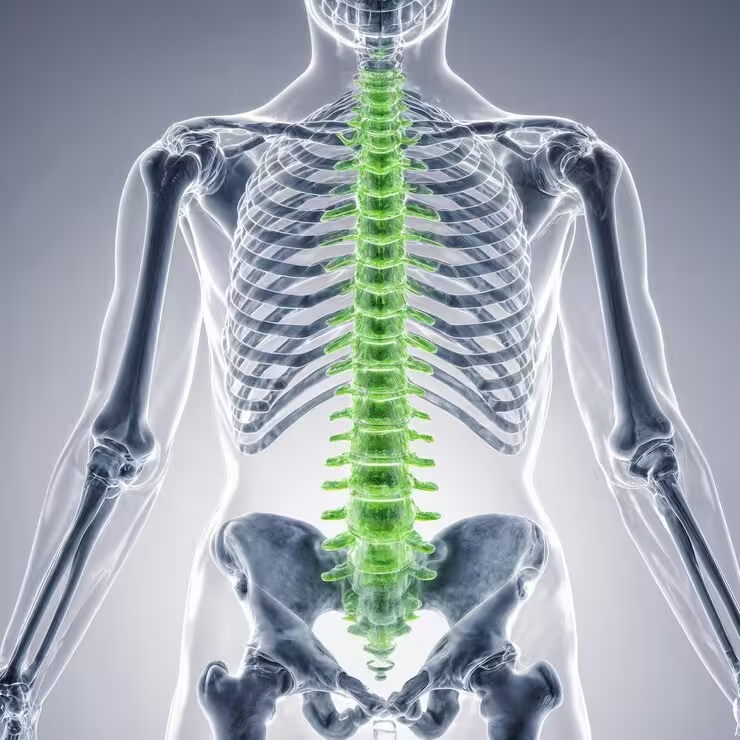
Back pain can originate from different structures of the spine and surrounding tissues. Identifying the precise anatomical source is essential for effective care.
A spinal disc can bulge or herniate and irritate or compress a nearby nerve, causing lower back pain, buttock pain, leg pain, sciatica, numbness, tingling, or weakness. Many improve without surgery, but persistent compression may require intervention.
Refers to pain or other symptoms travelling along the path of the sciatic nerve, usually from the lower back into the buttock and leg. It is commonly associated with nerve compression from a disc problem or spinal narrowing.
Occurs when spaces around the spinal nerves become narrowed, leading to lower back pain, leg pain, numbness, tingling, weakness, and difficulty standing or walking for prolonged periods.
Spinal discs undergo degenerative changes over time. Some people have disc degeneration without symptoms, while others experience persistent back pain. Treatment depends on clinical findings rather than MRI appearance alone.
Occurs when one vertebra shifts relative to another. It can sometimes cause back pain, nerve compression, or leg symptoms, with management ranging from conservative care to surgery.
Compression fractures cause sudden or persistent back pain depending on stability and bone health. Additionally, pain around the lower back or buttock can originate from the sacroiliac joint.
You should consider specialist evaluation if your back pain:
Certain symptoms require urgent medical evaluation rather than routine home treatment:
New incontinence or difficulty emptying bladder/bowel requires immediate attention.
Numbness around the groin, perineum, or saddle area.
Rapidly developing significant leg weakness or foot drop following major trauma or severe pain.
A proper diagnosis is established before choosing any treatment protocol.
Detailed review of symptom onset, pain location, radiation into legs, previous treatments, aggravating activities, and numbness or weakness.
Assessment of spinal mobility, muscle strength, sensory mapping, deep tendon reflexes, walking pattern, and neurological function.
Evaluates soft tissues, disc health, nerve root compression, spinal stenosis, and structural abnormalities with high precision.
X-rays assess spinal alignment, degenerative changes, and fractures, while CT scans provide detailed bony architecture when required.
Many patients with back pain improve without surgery. Depending on the cause, conservative care may include:
Back pain alone does not mean surgery is necessary. Surgery is considered when an identifiable structural problem causes significant symptoms:
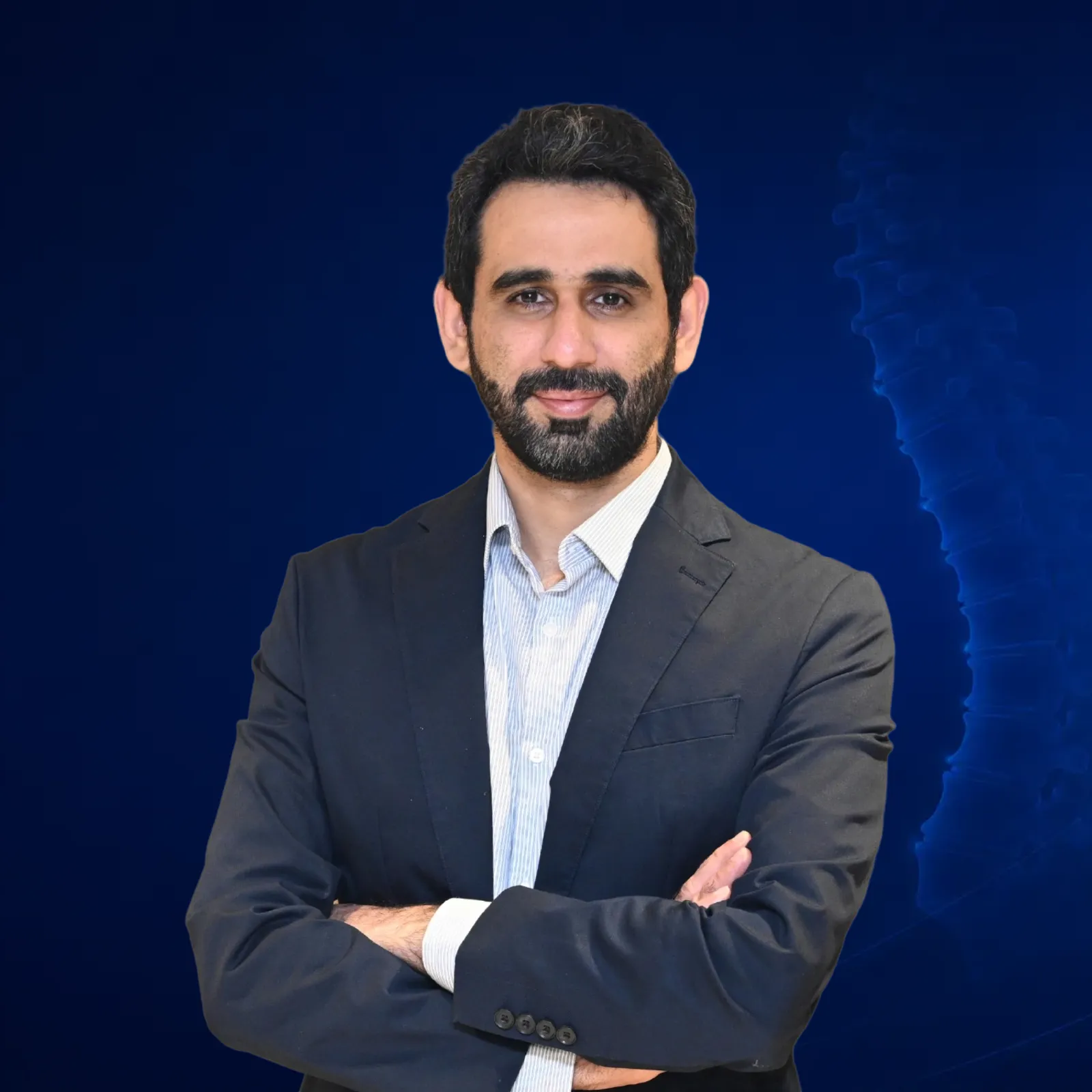
Dr. Dheeraj Batheja is a Senior Consultant – Ortho Spine Surgery at Artemis Hospitals, Gurugram, with extensive expertise in accurate diagnosis, non-surgical management, and minimally invasive spine surgery.
Dr. Batheja has 13+ years of dedicated experience diagnosing and treating complex back pain, disc disorders, spinal stenosis, and instability.
His professional record encompasses more than 5,000 successful spine surgeries, ranging from microdiscectomy and decompression to fusion.
Specializing in minimally invasive and endoscopic spine surgery, treatment plans are tailored to achieve precise neural decompression with reduced recovery times.
Qualifications include MBBS from Maulana Azad Medical College, MS Orthopaedics from UCMS & GTB Hospital, DNB, MNAMS, and MRCS (England). His credentials include over two years of spine surgery training at Robert Jones and Agnes Hunt Orthopaedic Hospital in the UK and an AO Global Spine Diploma.
Back pain can have very different causes. Treatment is based on clinical symptoms, examination findings, and imaging to determine whether conservative care or surgery is required.
Recovery depends entirely on the cause of your back pain and the specific treatment provided. Non-surgical care involves guided rehabilitation, while surgical recovery varies by procedure.
Patients from Bahadurgarh can travel to Gurugram for specialist evaluation of persistent or complex back pain. Dr. Dheeraj Batheja does not provide back pain treatment in Bahadurgarh itself; his consultation and surgical care are provided at Artemis Hospitals in Gurugram.
The important distinction is: Bahadurgarh = patient location, while Gurugram = consultation and treatment location. Patients from Bahadurgarh, Jhajjar, Tikri Border, and Najafgarh can easily reach the clinic via Western Peripheral Expressway (KMP) or Rohtak Road / Dwarka Expressway.
Consultation Location: Artemis Hospital Road, Sector 51, Gurugram, Haryana 122018
Comprehensive answers regarding back pain treatment, slipped discs, sciatica, spinal stenosis, and travel from Bahadurgarh to Gurugram.
Yes. Patients from Bahadurgarh can consult Dr. Dheeraj Batheja in Gurugram for evaluation and treatment of back pain and related spinal conditions.
No. His listed practice location is Gurugram at Artemis Hospitals. Patients from Bahadurgarh travel to Gurugram for consultation, diagnosis, and treatment.
Back pain may be related to muscular problems, disc disorders, sciatica, spinal stenosis, degenerative spine disease, spondylolisthesis, fractures, sacroiliac joint problems, and other conditions.
No. Many patients improve with non-surgical treatment such as medication, physiotherapy, activity modification, and rehabilitation.
Surgery may be considered when a specific structural problem is causing significant symptoms and appropriate non-surgical treatment has not provided adequate improvement, or when there is significant neurological compression, instability, or another surgical indication.
Yes. A slipped or herniated disc can cause lower back pain and may also cause sciatica, numbness, tingling, or weakness when a nerve is affected.
Yes. When a spinal nerve is compressed or irritated, pain can travel from the lower back into the buttock and leg. This is commonly associated with sciatica.
Depending on the symptoms, the doctor may recommend an MRI, X-ray, CT scan, or other investigations. Not every patient requires imaging.
Bring previous MRI or CT scans, X-rays, prescriptions, medical reports, and details of previous treatments, if available.
The consultation location is Artemis Hospital Road, Sector 51, Gurugram, Haryana 122018.
Persistent back pain should not be treated based only on the location or severity of pain. Identifying the underlying cause is important for choosing the appropriate treatment. Patients from Bahadurgarh can consult Dr. Dheeraj Batheja in Gurugram for specialist evaluation of back pain, slipped disc, sciatica, spinal stenosis, degenerative spine conditions, and other spinal problems.
Consultation Clinic: Artemis Hospital Road, Sector 51, Gurugram, Haryana 122018