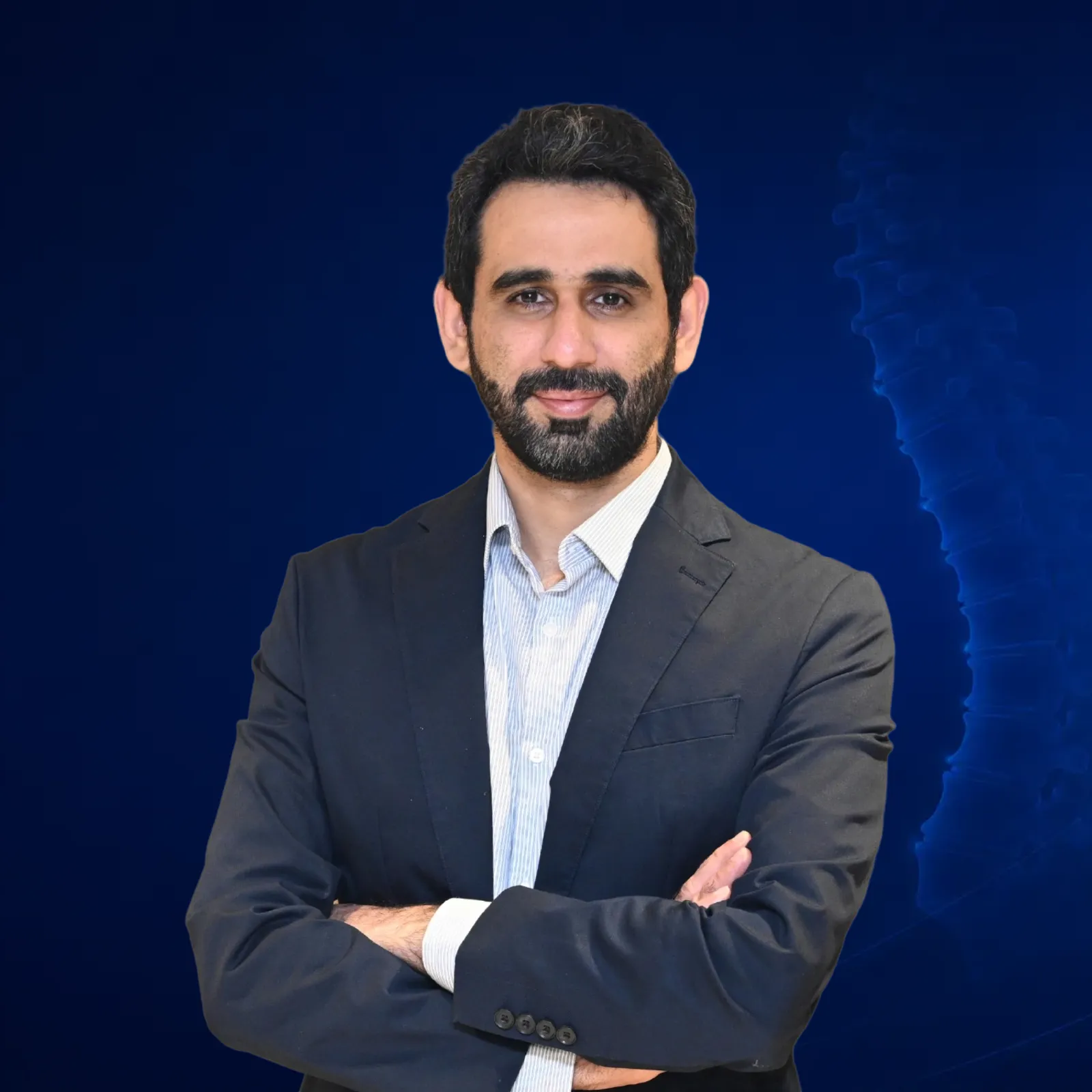
Persistent neck pain, pain travelling into the shoulder or arm, numbness, tingling, hand weakness, or difficulty with balance can be related to a problem in the cervical spine. Patients from Bhiwadi who require specialist evaluation for a cervical spine condition can consult Dr. Dheeraj Batheja in Gurugram. Dr. Batheja is a Senior Consultant – Ortho Spine Surgery at Artemis Hospitals with 13+ years of spine surgery experience and more than 5,000 spine surgeries performed.
Patients from Bhiwadi are treated in Gurugram, not at a clinic in Bhiwadi. The appropriate treatment is determined after carefully evaluating the patient's symptoms, neurological examination, and imaging.
Senior Consultant – Ortho Spine Surgery
The cervical spine is the upper portion of the spine located in the neck. Problems affecting the cervical discs, nerves, spinal cord, or vertebrae can cause symptoms in the neck, shoulders, arms, and hands.
Some cervical spine conditions improve with non-surgical treatment. Surgery may be considered when there is persistent nerve or spinal cord compression, significant neurological symptoms, structural instability, or symptoms that do not improve adequately with appropriate conservative treatment.
Dr. Dheeraj Batheja provides evaluation and surgical treatment for selected cervical spine conditions in Gurugram, including cervical disc herniation, cervical spondylosis, cervical stenosis, cervical myelopathy, cervical radiculopathy, and cervical spine instability.
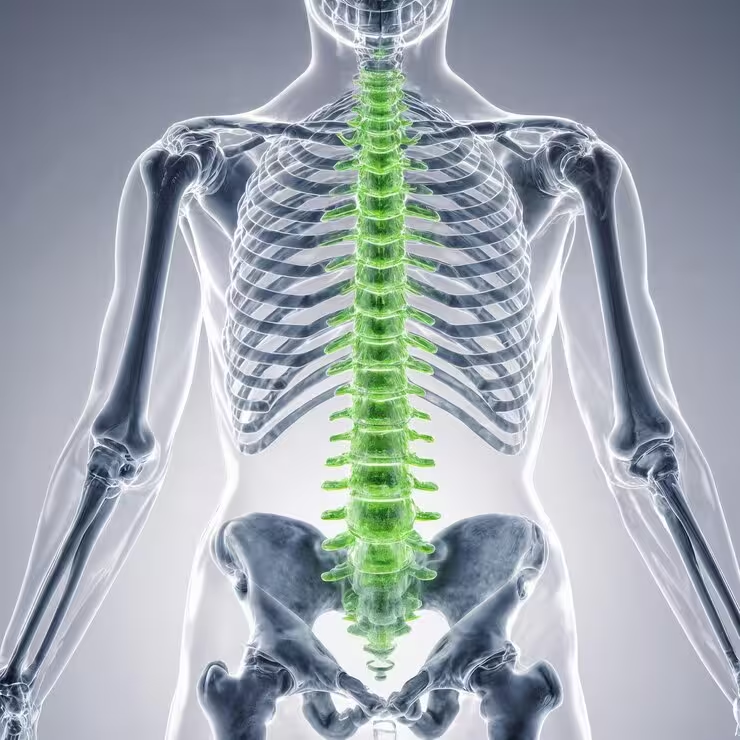
Cervical spine surgery refers to procedures performed on the neck portion of the spine to relieve pressure on a spinal nerve or the spinal cord, treat damaged disc material, decompress narrowed spaces, or stabilise an unstable portion of the spine.
The exact procedure depends on the underlying cervical pathology. Possible surgical approaches include:
Removes the problematic disc to decompress nerves and stabilizes the segment with a fusion cage.
Motion-preserving technology that replaces damaged discs with an artificial motion implant.
Relieves pressure on the spinal cord caused by severe canal narrowing or bone spurs.
Enlarges the exit pathways for pinched nerve roots or reconstructs unstable spinal segments.
Symptoms can vary depending on whether the problem primarily affects a nerve root, the spinal cord, or both:
If symptoms such as progressive weakness, dropping objects, loss of coordination, or balance problems are developing or worsening, timely specialist medical evaluation is critical to prevent irreversible spinal cord injury.
Cervical surgical intervention is reserved for specific anatomical problems confirmed by imaging and clinical examination.
A cervical disc can bulge or herniate and compress a nearby nerve root, causing neck pain, arm pain, numbness, tingling, or weakness. When persistent nerve compression causes significant pain that fails conservative treatment, surgery may be considered.
Refers to age-related degenerative changes in the cervical discs, facet joints, and vertebrae. It can contribute to neck pain, stiffness, bone spur formation, nerve compression, arm symptoms, or secondary spinal cord compression.
Occurs when the central spinal canal or neuroforaminal spaces become narrowed by hypertrophied ligaments and osteophytes, causing arm symptoms, numbness, weakness, balance problems, or spinal cord dysfunction.
Occurs when a spinal nerve root in the neck becomes irritated or pinched, producing sharp, radiating pain down the shoulder and arm, accompanied by sensory changes and motor deficits along specific dermatomal levels.
Direct spinal cord compression in the neck. Symptoms include hand clumsiness, difficulty buttoning shirts or writing, gait imbalance, and leg weakness. Because myelopathy can progress irreversibly, timely decompression is critical.
Excessive or abnormal movement between cervical vertebrae resulting from advanced degeneration, trauma, or previous surgery. Selected cases require surgical fusion and rigid instrumentation to stabilize the spine.
No. Treatment depends on the diagnosis, severity of symptoms, neurological findings, and imaging. Many patients improve with non-surgical protocols:
Surgery may be recommended based on the combination of symptoms, physical exam, and imaging when:
A detailed evaluation is performed before recommending any cervical procedure:
Shows cervical discs, nerve root exits, spinal cord compression, and soft-tissue architecture.
Evaluates cervical curvature, lordosis, disc height collapse, and dynamic instability during flexion/extension.
Provides high-resolution bony mapping to assess osteophytes, facet arthrosis, and ossification of posterior longitudinal ligament (OPLL).
Comprehensive testing of motor strength, reflexes (Hoffmann’s, Babinski), sensory mapping, and EMG/NCV studies when indicated.
To make your consultation in Gurugram as efficient as possible, please bring your existing medical documentation:
The surgical approach is chosen based on the precise location of compression, the number of levels involved, and spinal alignment.
A gold-standard procedure in which the herniated or degenerate disc is removed from the front of the neck to relieve neural compression, followed by stabilizing the disc space with a bone graft or cage and plate. Artemis Hospitals lists Dr. Dheeraj Batheja among its cervical spine and ACDF specialists.
A motion-preserving procedure used in selected patients with cervical disc degeneration and neck or arm pain. Instead of fusing the vertebrae, an artificial disc implant is inserted to preserve normal neck mobility and protect adjacent levels from accelerated wear.
Considered for patients with multi-level spinal cord compression and cervical stenosis where removing part of the posterior bony lamina creates space for the cord to drift backward and heal. Artemis Hospitals lists Dr. Batheja among its cervical laminectomy specialists.
Enlarges the neural foramen through which a compressed spinal nerve exits the cervical canal. Dr. Batheja's practice covers foraminotomy for spinal stenosis, pinched nerves, and cervical radiculopathy without requiring fusion in selected cases.
Uses tubular access systems and microsurgical optics to access selected cervical spine conditions with smaller incisions, minimized muscle detachment, reduced postoperative discomfort, and earlier mobilization.
Dr. Dheeraj Batheja is a Senior Consultant – Ortho Spine Surgery at Artemis Hospitals, Gurugram, with extensive expertise in minimally invasive, motion-preserving, and reconstructive cervical spine procedures.
Dr. Batheja has 13+ years of dedicated experience diagnosing and treating complex cervical spinal conditions, radiculopathy, and cord compression.
His professional record encompasses more than 5,000 spine surgeries, including ACDF, artificial disc replacements, and decompression procedures.
His clinical practice covers cervical disc herniation, cervical spondylosis, stenosis, myelopathy, radiculopathy, and spinal instability, with expertise in both fusion and motion-preserving disc arthroplasty.
Qualifications include MBBS from Maulana Azad Medical College (MAMC), MS Orthopaedics from UCMS & GTB Hospital, DNB, MNAMS, and MRCS (England). His credentials include over two years of spine surgery training at The Robert Jones and Agnes Hunt Orthopaedic Hospital in the UK and an AO Global Spine Diploma from Davos, Switzerland.
Not every patient with neck pain requires surgery. Treatment planning begins with a thorough evaluation, prioritizing non-surgical care wherever appropriate and selecting the safest technique when surgery is necessary.
Recovery varies depending on the type of cervical procedure, whether decompression alone or fusion/replacement was performed, the number of levels treated, the severity of preoperative nerve compression, and general health.
Patients from Bhiwadi can travel to Gurugram for specialist cervical spine evaluation and surgical treatment. Dr. Dheeraj Batheja does not provide cervical spine surgery in Bhiwadi itself; his consultation and surgical care are provided at Artemis Hospitals in Gurugram.
The important distinction is: Bhiwadi = patient location, while Gurugram = consultation and treatment location. Patients from Bhiwadi, Dharuhera, Tapukara, Tijara, and Khushkhera can easily reach the clinic via NH-48.
Consultation Location: Artemis Hospital Road, Sector 51, Gurugram, Haryana 122018
Comprehensive answers regarding cervical spine procedures, ACDF, disc replacement, myelopathy, and travel from Bhiwadi to Gurugram.
Yes. Patients from Bhiwadi can consult Dr. Dheeraj Batheja in Gurugram for evaluation of cervical spine conditions and discussion of appropriate treatment options.
No. His listed practice location is in Gurugram at Artemis Hospitals. Patients from Bhiwadi travel to Gurugram for consultation and treatment.
Depending on the patient's condition, surgery may be considered for cervical disc herniation, cervical spondylosis, cervical spinal stenosis, cervical myelopathy, cervical radiculopathy and cervical instability.
No. Many cervical disc problems can initially be managed without surgery. Surgery is considered when there is an appropriate indication based on symptoms, examination and imaging.
Symptoms can include hand clumsiness, weakness, difficulty with fine movements (such as buttoning a shirt or writing), balance problems, walking difficulties and altered sensation.
Anterior cervical discectomy and fusion, or ACDF, is a cervical spine operation used to remove a problematic disc and decompress affected neural structures, followed by stabilisation of the treated spinal level using a fusion cage.
Cervical disc replacement is a motion-preserving procedure that replaces a damaged cervical disc with an artificial disc implant in appropriately selected patients, preserving natural neck mobility.
Cervical spine surgery can be performed safely when appropriately indicated and planned, but every surgical procedure has potential risks. The individual risks depend on the patient's condition and the procedure being considered.
There is no single recovery period for all cervical procedures. Recovery depends on the type and extent of surgery (decompression vs fusion), the patient's condition and individual healing.
Bring previous MRI or CT scans, X-rays, prescriptions, medical reports and details of previous treatments, if available.
The consultation location is Artemis Hospital Road, Sector 51, Gurugram, Haryana 122018.
If you have persistent neck pain, arm pain, numbness, tingling, weakness, hand coordination problems or symptoms associated with cervical nerve or spinal cord compression, specialist evaluation can help determine the cause. Patients from Bhiwadi can consult Dr. Dheeraj Batheja in Gurugram for evaluation and treatment planning for cervical spine conditions.
Consultation Clinic: Artemis Hospital Road, Sector 51, Gurugram, Haryana 122018